Sounds a little scary right? Well it is in a way if you value true human interaction and genuine connection.
Since becoming interested in ADHD and then getting diagnosed I have scoured the internet looking for peer support and connecting with others that are dealing with what ADHD means for them. I also set up the hyperfocused.co.uk website and social media accounts for my own catharsis but also to spread awareness.
What was hard initially was starting out and seeing ADHD groups with hundreds and thousands of members and feelings like I was merely chucking a small stone into a vast ocean but as my son said, if you help just one person it’ll be worthwhile. Wise words mate!
So what’s wrong with Facebook groups such as the plethora set up for ADHD? Well they are dominated by fake accounts and posts that are almost always the same. They post repetitively the same content normally on a colourful background and it’s very generic (but inviting) content such as “I can’t function like this anymore, how can I keep going?” which then attracts lots of sympathetic replies.
I have looked further into these and found identical posts from different fake accounts and they are on constant rotation.
Why is this a problem?
Some may argue that stimulating discussion is the point and is useful even if the posts are planned with military precision and repetition. But why is this happening?
Well, bots are used commonly to help run groups especially when you have a vast membership base but these ones can only be a very well organised operation designed to be applied for less honourable reasons. They can eventually extract personal information from users lending themselves to phishing scams, identity theft etc and also there is the chance to earn ads revenue as they get lots of hits and engagement on their posts. They are getting lots of engagement by putting out clickbait and in doing so they are not standing out so much on the algorithms as they appear genuine and under the radar.
The human issue is that on an ADHD group many people feel vulnerable, scared and uncertain of the future and are being played by fake accounts but no real human support. It’s heartening to see conversations that help those users prompted by the bots but it feels a little hollow. But hey, perhaps I need to get with it – the spread of normalised use of AI seems irrepressible after all and I use it for podcast episodes and helping with graphics to great effect.
It just grates on me that people are being used by a very well oiled machine when genuine human warmth and support would be much more welcome and at worst they are being mined for criminal purposes down the line.
How to spot a bot user on Facebook?
- They often use names that don’t seem to fit with the name
- Look at their profile, most of the ones I’ve seen list their position as ‘digital creator’
- They rarely respond to your comments or replies to their posts.
- They post at all hours as if run by a machine (which they are)
- Their profile can carry inaccuracies such as two profile photos of two entirely different people
- Check when you see identical posts from different accounts, the accounts are so similar and sterile without a lot of personal info
What do you do if you see a bot post?
Up to you, some people say not to engage as even calling them out gives them engagement helping to legitimise them.
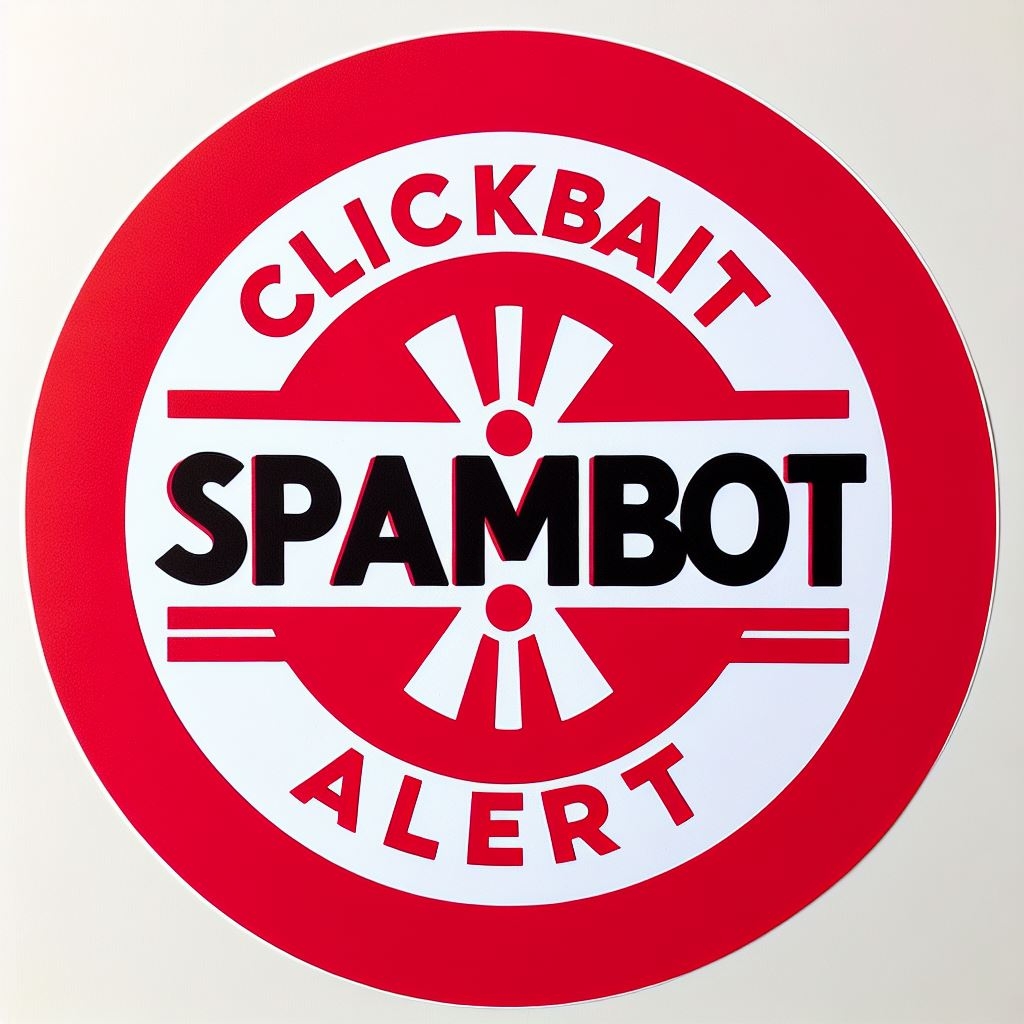
Personally I would rather alert others to the fact that these are fake accounts harvesting your details and attention. I used the sign created here to call it out but it’s a losing battle as this march of the bots is…RELENTLESS!

Leave a Reply